
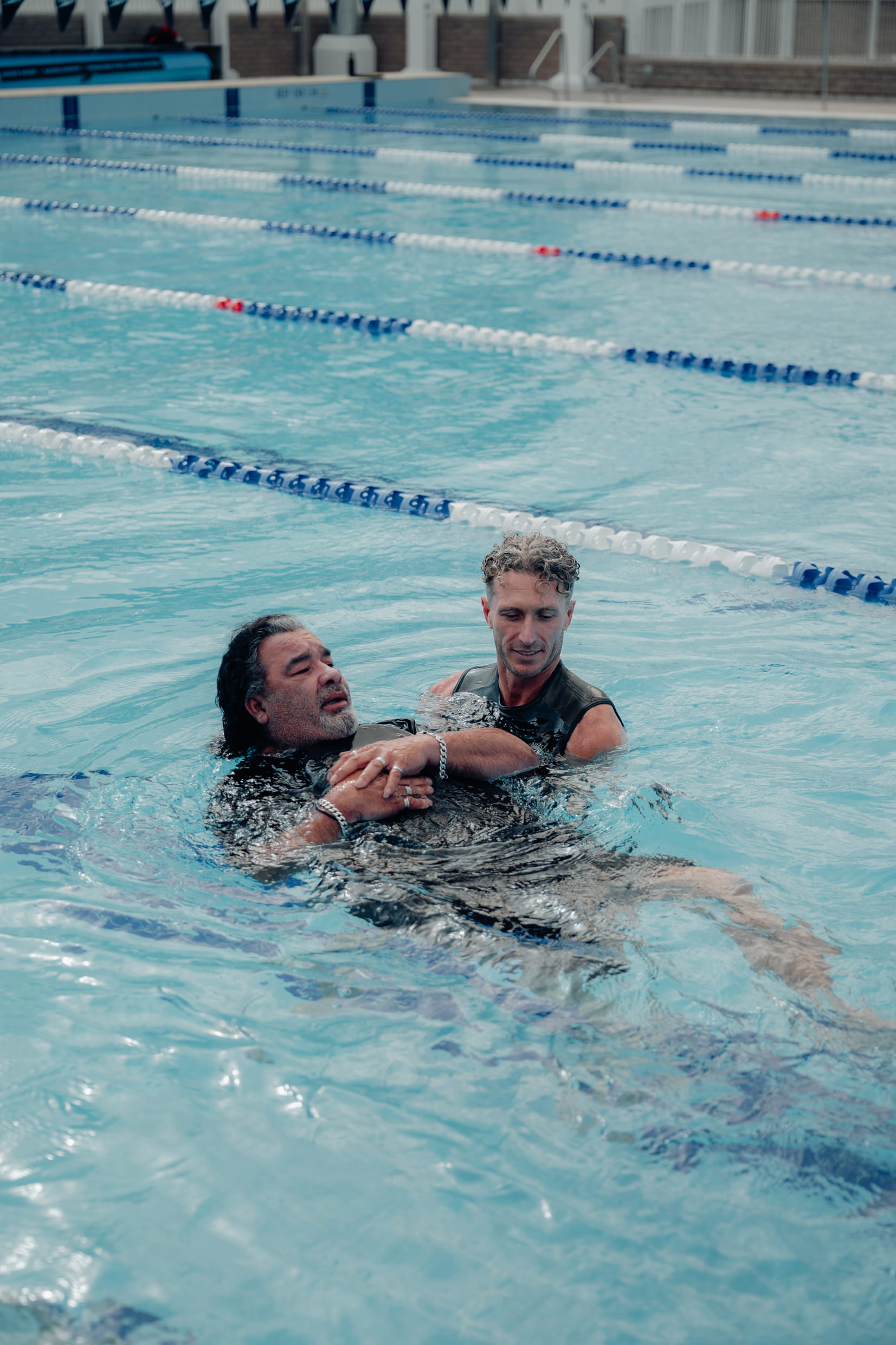
Water-based therapy offers a different way to work on movement, strength, and mobility, and for many people it opens up possibilities that land-based exercises can’t.
Blue Water Physio delivers hydrotherapy at community pools across the Gold Coast and Northern NSW, bringing your physiotherapist directly to the water with you.
What is hydrotherapy?
Hydrotherapy is physiotherapy delivered in a heated pool. The water environment reduces load on joints, provides natural resistance, and allows movements that may be difficult or uncomfortable on land.
Sessions are led by your physiotherapist, who designs and guides a program based on your goals and physical needs. It is not a swimming lesson and no swimming ability is required.
Who is it for?
Hydrotherapy can be a useful part of physiotherapy support for people with:
- Neurological conditions including stroke, MS, Parkinson’s disease, and cerebral palsy
- Musculoskeletal conditions affecting joints, back, or mobility
- Reduced weight-bearing capacity or sensitivity to land-based exercise
- NDIS participants with community access and physical goals
- Older adults working on balance, strength, and falls prevention
How we deliver it
We work at community pools across the Gold Coast and Northern NSW. Your physiotherapist accompanies you into the water and supervises every session. We handle the logistics of pool access and work with your support worker or carer if they are involved.
We service clients across Robina, Southport, Broadbeach, Helensvale, Coomera, Palm Beach, Murwillumbah, Ballina, and surrounding areas.
Funding your hydrotherapy
- NDIS: Capacity Building (Improved Daily Living). We work with agency-managed, plan-managed and self-managed participants.
- Support at Home: we work alongside your Support at Home provider.
- Restorative Care Pathway: short-term allied health support through Support at Home, arranged with your aged care provider.
- Medicare: rebates for up to five sessions a year with a GP Chronic Condition Management Plan and GP referral.
- Private health insurance: depending on your extras cover.
- DVA: Gold Card or White Card (for accepted conditions), with a GP referral.
- Private (self-funded)
Frequently Asked Questions
What is hydrotherapy and how is it different from swimming?
Hydrotherapy is physiotherapist-led exercise in a heated pool. Unlike swimming, it focuses on therapeutic goals such as improving movement, strength, and function. No swimming ability is required.
Is hydrotherapy covered by NDIS?
Yes. Hydrotherapy delivered by a physiotherapist is usually funded under Capacity Building (Improved Daily Living). Your support coordinator or plan manager can help confirm what applies to your plan.
Where do hydrotherapy sessions take place on the Gold Coast?
We use community pools across the Gold Coast and Northern NSW. Your physiotherapist will confirm the most suitable and accessible pool for your location.
Do I need to be able to swim?
No. Hydrotherapy sessions are conducted in shallow water under the direct supervision of your physiotherapist. Swimming ability is not required.
Do I need a referral for hydrotherapy?
No referral is needed for NDIS or private clients. Support at Home and Restorative Care Pathway sessions are arranged through your aged care provider. Medicare-rebated sessions need a GP Chronic Condition Management Plan and GP referral, and DVA clients need a GP referral. Contact us and we’ll help clarify what applies to you.